
If you’ve ever felt a sharp, burning pain shooting down your leg, you know how debilitating it can be. That electric jolt that makes you catch your breath, the numbness that spreads through your buttock and thigh, or the tingling sensation that just won’t quit—these are hallmark signs of sciatica, and they often point to an underlying problem in your spine. Here in Magnolia, TX, we see patients every week at Southern Wellness Chiropractic who are struggling with these exact symptoms, and one of the most common culprits behind sciatica is a disc herniation. Understanding how these two conditions connect is the first step toward finding relief and getting back to the activities you love.
Many people assume sciatica is a condition in itself, but it’s actually a symptom of something else going wrong in your lower back. When a disc in your lumbar spine herniates, it can press on the sciatic nerve, triggering that characteristic radiating pain. The good news? Once you understand what’s happening in your body and why, you can make informed decisions about your care and take meaningful steps toward recovery. Let’s connect the painful dots between sciatica and disc herniation so you can better understand what’s happening and what you can do about it.
What Is Sciatica? A Clear Definition
What exactly is sciatica?
Sciatica refers to pain that radiates along the path of the sciatic nerve, which branches from your lower back through your hips and buttocks and down each leg. It typically affects only one side of your body. Sciatica is not a diagnosis itself but rather a symptom of an underlying condition that irritates or compresses the sciatic nerve, most commonly a herniated disc.
Table of Contents
- What Is Sciatica? A Clear Definition
- Understanding Disc Herniation: What Happens in Your Spine
- How Disc Herniation and Sciatica Connect
- Recognizing the Symptoms: What Sciatica from a Herniated Disc Feels Like
- Common Causes and Risk Factors
- How Chiropractic Care Addresses Sciatica and Disc Herniation
- Practical Tips for Managing Symptoms at Home
- When to See a Chiropractor
- Treatment Approaches Comparison
- Myths vs. Facts About Sciatica and Disc Herniation
- Final Thoughts
Understanding Disc Herniation: What Happens in Your Spine
Your spine is made up of 33 vertebrae stacked on top of each other, separated by cushion-like structures called intervertebral discs. These discs act as shock absorbers, allowing your spine to bend, twist, and handle the daily stresses of movement. Each disc has a tough outer layer called the annulus fibrosus and a soft, gel-like center called the nucleus pulposus.
A disc herniation occurs when the outer layer of the disc weakens or tears, allowing the inner gel-like material to push out. This bulging or protruding disc material can then press against nearby nerves, including the sciatic nerve. Think of it like a jelly donut that’s been squeezed too hard—the filling starts to leak out through a crack in the pastry.
Herniated discs most commonly occur in the lumbar spine, particularly at the L4-L5 and L5-S1 levels, which are the lowest two discs in your lower back. These areas bear the most weight and experience the most movement, making them vulnerable to injury and degeneration over time.
The degree of herniation can vary. Sometimes the disc simply bulges outward. Other times, the inner material extrudes through the outer layer. In severe cases, fragments of disc material can break off entirely, a condition called sequestration. Each of these scenarios can create different levels of nerve compression and pain.
How Disc Herniation and Sciatica Connect
The sciatic nerve is the longest and widest nerve in your body, starting in your lower back and running through your buttocks and down each leg. It’s formed by nerve roots that exit the spine at the L4, L5, and S1 levels. When a disc herniates at any of these levels, the extruded disc material can press directly on these nerve roots or the sciatic nerve itself.
This compression creates inflammation around the nerve, which triggers pain signals that travel along the entire length of the nerve pathway. That’s why you might feel pain that starts in your lower back but shoots all the way down to your calf or foot. The nerve is like a highway carrying information between your brain and your leg, and when there’s a roadblock or irritation at the source, the entire route feels the impact.
Not everyone with a herniated disc develops sciatica, and not all sciatica is caused by disc herniation. Other conditions like spinal stenosis, piriformis syndrome, or degenerative disc disease can also irritate the sciatic nerve. However, research indicates that disc herniation is one of the most common causes of true sciatica, particularly in adults under 50.
The location and size of the herniation matter significantly. A large herniation that compresses the nerve root directly will typically cause more severe symptoms than a small bulge that only mildly irritates the nerve. The direction of the herniation also plays a role—a posterolateral herniation, which bulges toward the back and side of the spine, is more likely to compress nerve roots than a central herniation.
Recognizing the Symptoms: What Sciatica from a Herniated Disc Feels Like
The symptoms of sciatica caused by disc herniation can range from mild and annoying to severe and debilitating. Most patients describe the pain as sharp, burning, or electric-like, though some experience it as a deep ache. The pain typically follows the path of the sciatic nerve down one side of the body.
Common symptoms include radiating pain from your lower back through your buttock and down the back of your leg. You might feel numbness or tingling in your leg or foot, often described as pins and needles. Muscle weakness in the affected leg is also common, making it difficult to stand on your toes or lift your foot.
Many patients notice that certain positions or movements make the pain worse. Sitting for long periods often aggravates sciatica because it increases pressure on the discs. Bending forward, coughing, or sneezing can also intensify symptoms by increasing pressure within the spinal canal. Conversely, some people find relief when standing, walking, or lying down.
At Southern Wellness Chiropractic, patients often tell Dr. John Tysdal that the pain is worse on one side and that it changes throughout the day. Morning stiffness is common, and symptoms may worsen after prolonged sitting or standing in one position. Some people also experience lower back pain along with leg symptoms, though the leg pain is typically more prominent and troublesome.
In rare cases, severe disc herniation can cause a condition called cauda equina syndrome, which requires immediate medical attention. Warning signs include sudden loss of bowel or bladder control, numbness in the groin or inner thighs, and progressive weakness in both legs. If you experience these symptoms, seek emergency medical care right away.
Common Causes and Risk Factors
Disc herniation doesn’t usually happen overnight. It’s often the result of gradual wear and tear combined with specific triggering events. Understanding the causes and risk factors can help you recognize why you might be experiencing sciatica and what you can do to prevent future episodes.
Age-related degeneration is one of the most significant factors. As we age, our discs naturally lose water content and become less flexible. This process, called disc degeneration, makes the discs more prone to tearing or rupturing with even minor stress or trauma. Most disc herniations occur in people between 30 and 50 years old.
Repetitive strain and improper lifting techniques contribute to many cases. Lifting heavy objects with your back instead of your legs, twisting while lifting, or repeatedly bending forward can stress the discs over time. Here in Magnolia, we see this frequently in patients whose work involves manual labor, but even weekend warriors who suddenly take on demanding physical activities can be at risk.
Excess body weight puts additional pressure on the discs in your lower back. Every extra pound increases the load your spine must support, accelerating disc degeneration and increasing the likelihood of herniation. Maintaining a healthy weight is one of the most effective ways to protect your spine.
Sedentary lifestyle and prolonged sitting weaken the muscles that support your spine. When your core muscles are deconditioned, your discs and ligaments must work harder to stabilize your spine, making them more vulnerable to injury. This is particularly relevant in our modern world where many people spend eight or more hours a day sitting at a desk.
Genetics also play a role. Some people inherit a predisposition to disc degeneration or have naturally weaker disc tissue. If disc problems run in your family, you may need to be more proactive about spine health throughout your life.
Sudden trauma from accidents, falls, or sports injuries can cause immediate disc herniation. A car accident or a hard fall onto your buttocks can generate enough force to rupture a disc instantly. Smoking is another risk factor, as it reduces oxygen supply to the discs and accelerates degeneration.
How Chiropractic Care Addresses Sciatica and Disc Herniation
When you come to Southern Wellness Chiropractic with sciatic pain, the first step is a thorough evaluation to determine the underlying cause. Dr. John Tysdal will perform a comprehensive examination that includes your medical history, physical assessment, orthopedic testing, and potentially imaging studies to confirm the presence and location of a disc herniation.
Chiropractic care offers a conservative, non-surgical approach to managing sciatica caused by disc herniation. The goal is to reduce nerve compression, decrease inflammation, improve spinal function, and support your body’s natural healing processes. Treatment is always individualized based on the severity of your symptoms and the specifics of your condition.
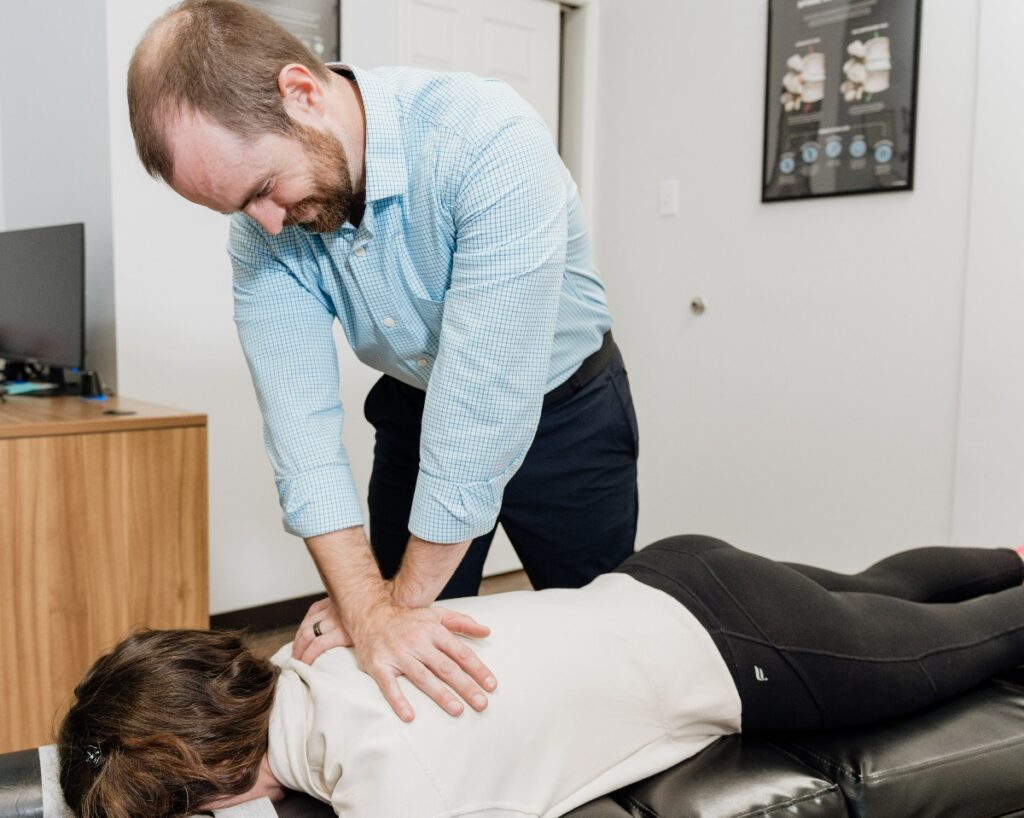
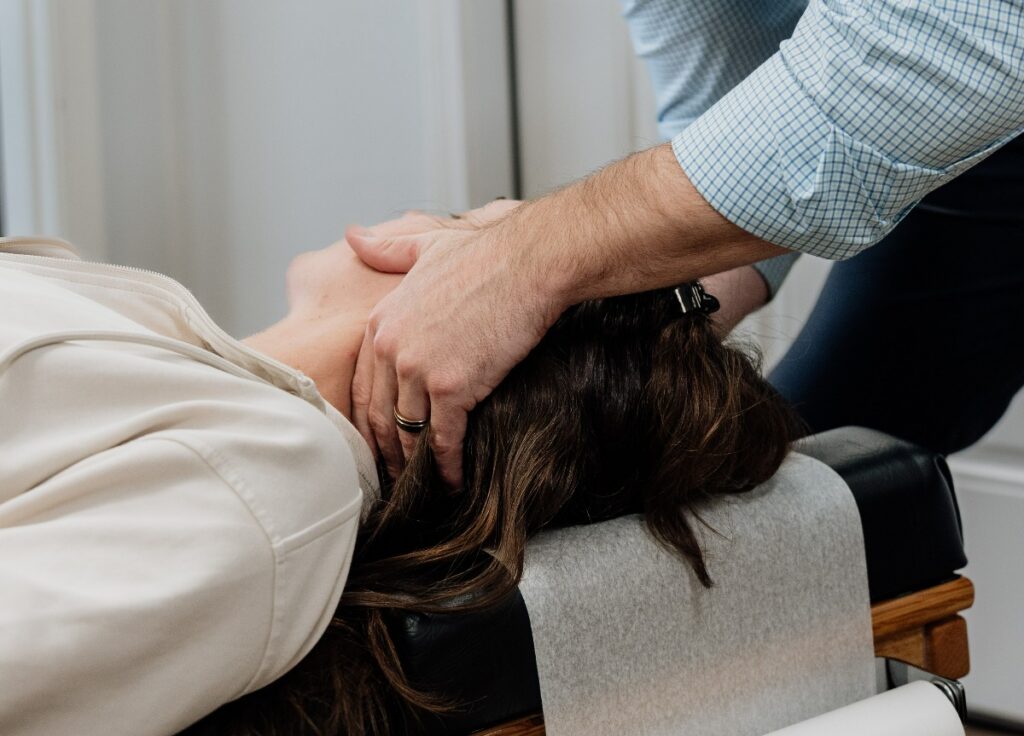
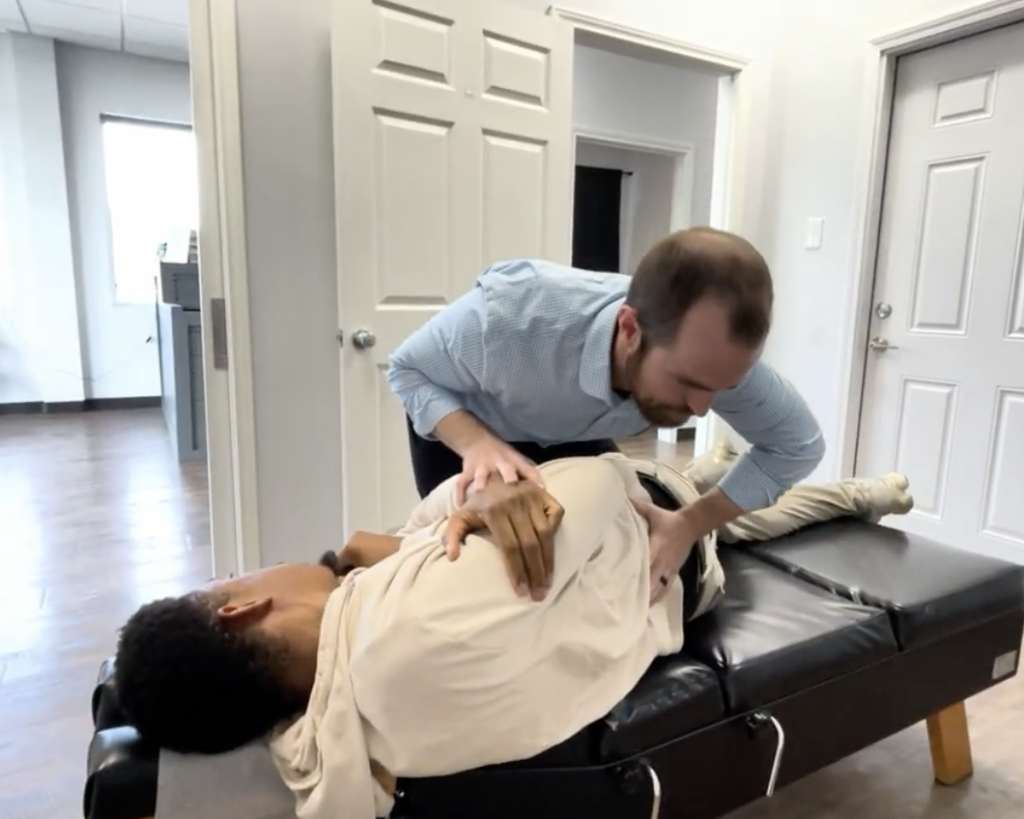
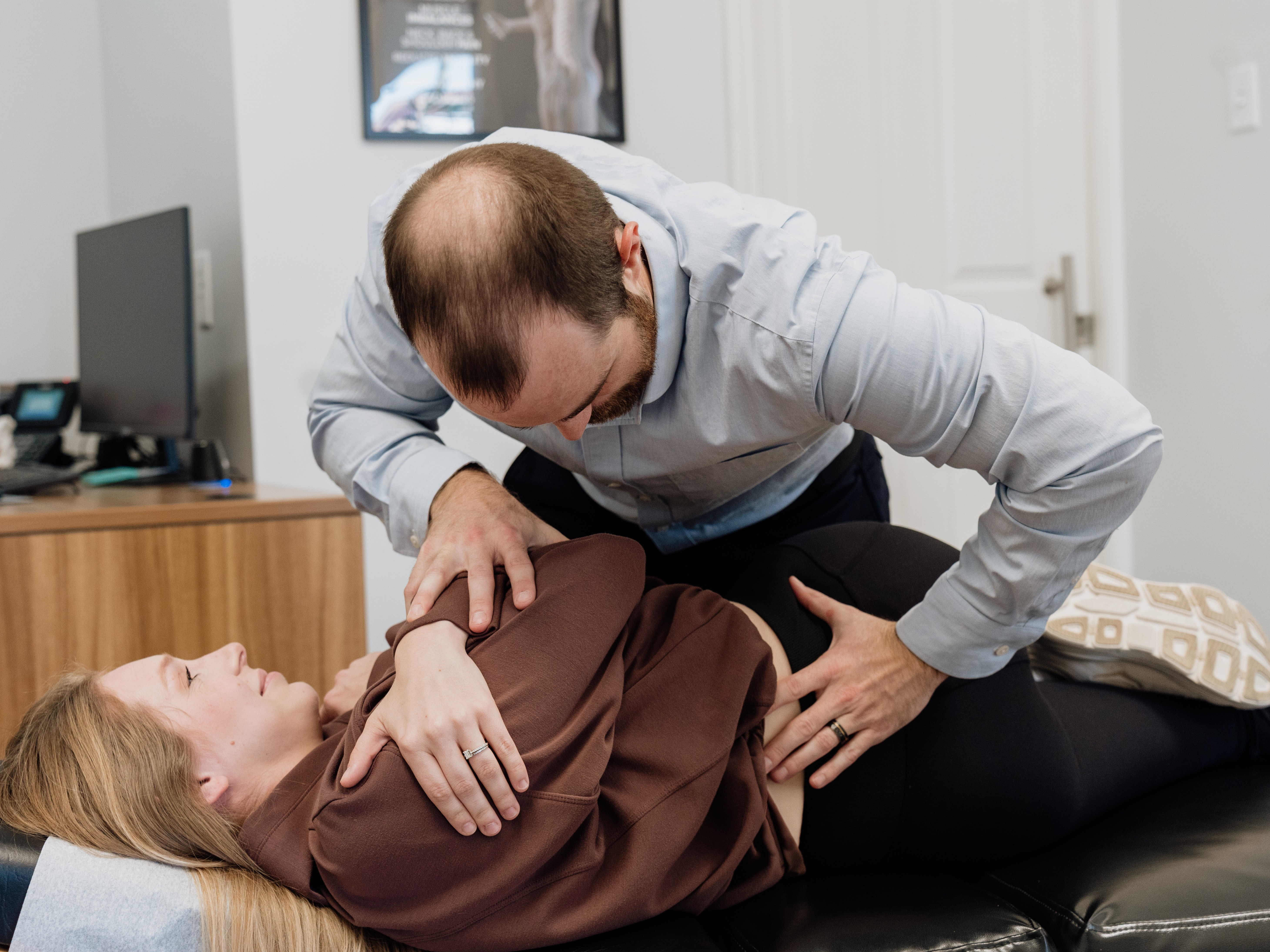
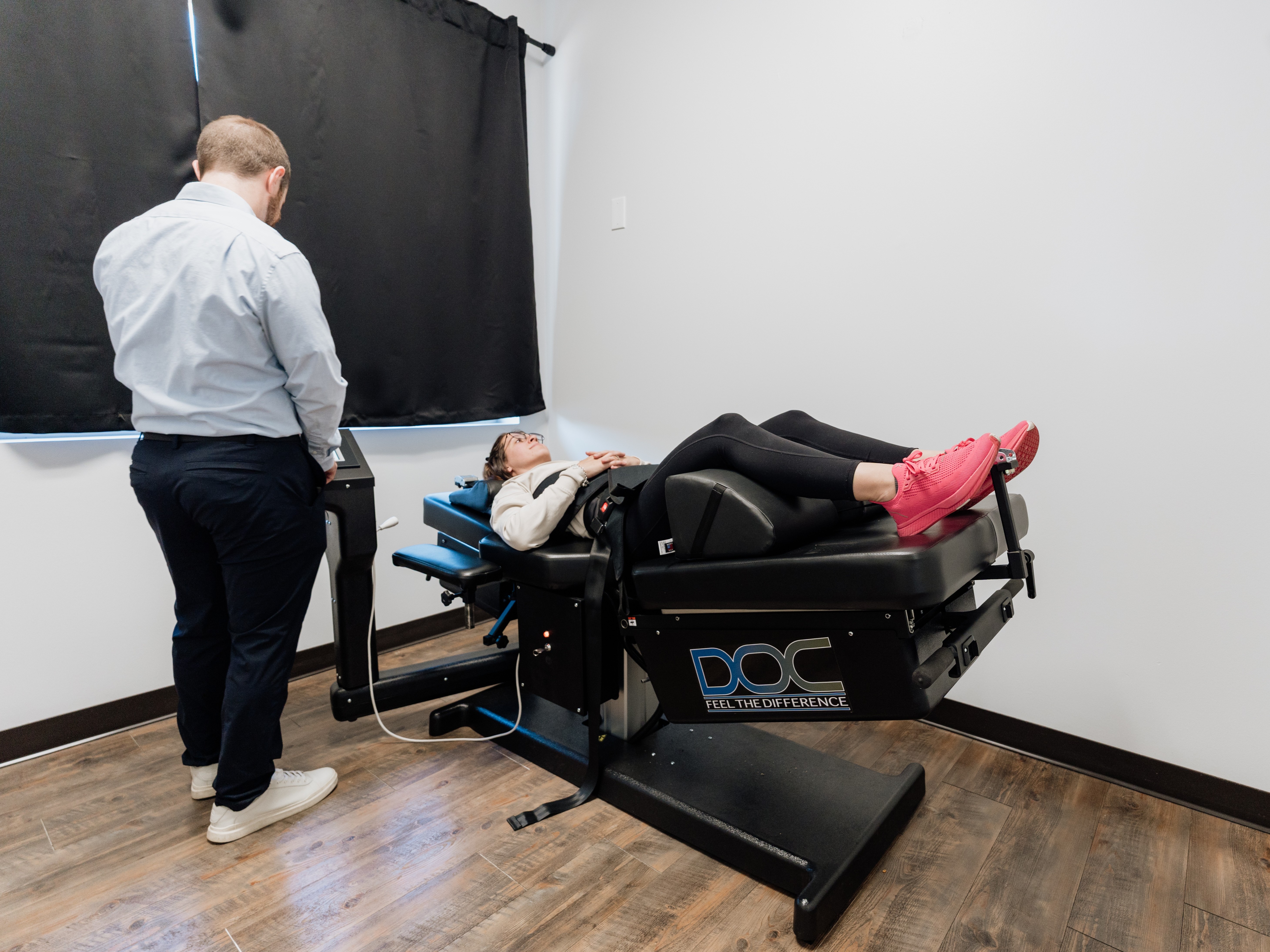
Spinal adjustments are a cornerstone of chiropractic care for sciatica. Gentle, specific adjustments can help restore proper alignment and movement to spinal segments, reducing pressure on the affected nerve root. For disc herniation, chiropractors use low-force techniques that avoid excessive pressure on the injured disc. Flexion-distraction technique, for example, uses a special table that gently stretches the spine, creating negative pressure within the disc that may help draw herniated material back toward the center.
Manual therapy and soft tissue work complement spinal adjustments by addressing muscle tension and inflammation around the affected area. Trigger point therapy, myofascial release, and gentle stretching can relieve muscle spasms that often accompany sciatica, providing immediate pain relief and improved mobility.
Many patients at our Magnolia practice benefit from therapeutic exercises designed to strengthen the core muscles that support the spine. A strong core reduces stress on your discs and helps prevent future herniations. Dr. John Tysdal will guide you through safe, effective exercises tailored to your condition and current pain level.
Modalities such as cold therapy, heat application, electrical stimulation, or ultrasound may be used to reduce inflammation and pain. These therapies support the healing process and make it easier to participate in more active treatments like exercise and rehabilitation.
Education is a critical component of chiropractic care. Understanding proper body mechanics, posture, and lifestyle modifications empowers you to manage your condition and reduce the risk of recurrence. Simple changes in how you sit, stand, lift, and move can make a tremendous difference in your recovery and long-term spine health.
Evidence indicates that conservative care, including chiropractic treatment, can be highly effective for many cases of sciatica due to disc herniation. A systematic review in the Cochrane Library found that spinal manipulation may provide short-term relief for acute low back pain with sciatica. The American College of Physicians guidelines recommend non-pharmacologic treatments, including spinal manipulation, as a first-line approach for low back pain.
Practical Tips for Managing Symptoms at Home
While professional care is important, there are several things you can do at home to manage sciatica symptoms and support your recovery. These practical strategies can provide relief and prevent your condition from worsening.
Stay gently active rather than remaining completely sedentary. Prolonged bed rest used to be the standard recommendation for sciatica, but research now suggests that remaining as active as pain allows promotes faster recovery. Short, frequent walks are often better than one long session. Movement helps reduce inflammation, maintain muscle strength, and prevent stiffness.
Apply ice during the acute phase of pain, especially in the first 48 to 72 hours after symptoms begin. Cold therapy reduces inflammation and numbs the area, providing temporary pain relief. Use an ice pack wrapped in a towel for 15 to 20 minutes every few hours. After the initial acute phase, heat therapy may be more beneficial, as it relaxes tight muscles and increases blood flow to the area.
Modify your sitting position and environment. If you work at a desk, make sure your chair provides good lumbar support. Sit with your feet flat on the floor and your knees at hip level or slightly higher. Take frequent breaks to stand and stretch every 30 to 45 minutes. Some patients find relief by sitting on a cushion with a cutout that reduces pressure on the tailbone.
Practice proper lifting techniques to avoid aggravating your disc herniation. Always bend at your knees rather than your waist, keep the object close to your body, and avoid twisting while lifting. If something is too heavy, ask for help rather than risking further injury.
Sleep in a position that minimizes nerve compression. Many people with sciatica find relief by sleeping on their side with a pillow between their knees. This position helps maintain neutral spine alignment and reduces pressure on the sciatic nerve. If you prefer sleeping on your back, place a pillow under your knees to reduce lumbar curve and disc pressure.
Perform gentle stretches that don’t aggravate your symptoms. Knee-to-chest stretches, pelvic tilts, and gentle hamstring stretches can help maintain flexibility without stressing the herniated disc. Always move slowly and stop if you experience sharp or radiating pain. Dr. John Tysdal can demonstrate specific stretches appropriate for your condition during your visit to Southern Wellness Chiropractic.
Maintain a healthy weight to reduce stress on your spine. Even losing five to ten pounds can make a noticeable difference in your symptoms. Focus on anti-inflammatory foods like fruits, vegetables, fish rich in omega-3 fatty acids, and whole grains while limiting processed foods and added sugars.
When to See a Chiropractor
Knowing when to seek professional care can make the difference between a quick recovery and chronic, long-lasting pain. If you’re experiencing sciatic symptoms, several factors should prompt you to schedule an appointment at Southern Wellness Chiropractic.
Seek care if your leg pain persists for more than a week despite home care measures. While some mild cases of sciatica resolve on their own, symptoms that linger or worsen indicate that professional intervention is needed. The sooner you address the problem, the better your chances of a full recovery without developing chronic pain.
If your pain is severe enough to interfere with daily activities like walking, working, or sleeping, don’t wait to get help. Severe pain often indicates significant nerve compression that requires professional treatment. Continuing to push through severe pain can lead to additional injury and prolonged recovery time.
Progressive weakness in your leg or foot is a red flag that shouldn’t be ignored. If you notice difficulty lifting your foot, standing on your toes, or climbing stairs, this suggests increasing nerve compromise that needs immediate attention. Muscle weakness that progresses can lead to permanent nerve damage if left untreated.
Numbness or tingling that spreads or intensifies requires evaluation. While some numbness is common with sciatica, symptoms that are getting worse or spreading to new areas suggest that the nerve compression is increasing. Early intervention can prevent permanent sensory changes.
Pay attention to bowel or bladder dysfunction, which includes difficulty urinating, loss of bladder control, or sudden constipation. These symptoms indicate possible cauda equina syndrome, a rare but serious condition requiring emergency medical care. While this is uncommon, it’s important to recognize the warning signs.
If you’ve had multiple episodes of sciatica, each recurrence can be more difficult to treat than the last. Addressing underlying spinal issues with comprehensive chiropractic care can help break the cycle of recurring pain and prevent future episodes.
Even if your symptoms are mild, seeking an evaluation can provide peace of mind and help you understand what’s causing your discomfort. Dr. John Tysdal can assess your condition, rule out serious problems, and provide guidance on managing your symptoms effectively here in Magnolia.
Treatment Approaches Comparison
| Treatment Approach | Best For | Timeline | Considerations |
|---|---|---|---|
| Chiropractic Care | Mild to moderate disc herniation with sciatica; patients seeking conservative, drug-free care | Several weeks to months with regular visits and home care | Non-invasive, addresses underlying mechanical issues, includes lifestyle guidance |
| Physical Therapy | Rebuilding strength and function, post-acute phase recovery | Several weeks to months with exercise progression | Focuses heavily on exercise rehabilitation and movement patterns |
| Pain Medication | Symptom management, acute pain relief | Short-term relief, hours to days per dose | Doesn’t address underlying cause, potential side effects with long-term use |
| Epidural Injections | Severe inflammation, failed conservative care | Relief may last weeks to months | Invasive procedure, temporary solution, potential risks |
| Surgery | Severe cases, progressive weakness, failed conservative treatments, cauda equina syndrome | Recovery takes months, relief may be immediate post-op | Most invasive option, carries surgical risks, generally considered last resort |
Myths vs. Facts About Sciatica and Disc Herniation
Myth: Sciatica Always Requires Surgery
Fact: Most cases of sciatica caused by disc herniation resolve with conservative care. Research shows that approximately 80 to 90 percent of people with sciatica improve without surgery. Conservative treatments including chiropractic care, physical therapy, and lifestyle modifications should be tried first. Surgery is typically reserved for severe cases with progressive neurological deficits or when conservative care has failed after an appropriate trial period.
Myth: You Should Stay in Bed Until Sciatica Goes Away
Fact: Prolonged bed rest can actually worsen sciatica and delay recovery. Current evidence supports staying as active as your pain allows. Gentle movement helps reduce inflammation, prevents muscle deconditioning, and promotes healing. Short rest periods are fine for severe pain, but you should gradually return to normal activities as soon as possible with guidance from your chiropractor.
Myth: A Herniated Disc Will Never Heal
Fact: Herniated discs can heal naturally over time. Your body has remarkable healing capabilities, and studies using MRI scans have shown that herniated disc material can shrink or even be reabsorbed by the body. This process, called resorption, occurs as your immune system breaks down the extruded disc material. While the disc may not return to its original state, many people experience complete resolution of symptoms as inflammation decreases and the body adapts.
Myth: Chiropractic Adjustments Will Make a Herniated Disc Worse
Fact: When performed by a trained, licensed chiropractor, adjustments for disc herniation are safe and often beneficial. Chiropractors use gentle, specific techniques designed to reduce nerve pressure without aggravating the injured disc. Dr. John Tysdal carefully evaluates each patient’s condition and uses appropriate low-force techniques when disc herniation is present. Studies have shown that chiropractic care can provide significant pain relief and improved function for sciatica patients.
Myth: If Your Pain Goes Away, Your Disc Herniation Is Cured
Fact: Pain relief doesn’t necessarily mean your disc has fully healed or that the herniation has resolved. Symptoms can improve as inflammation decreases and your body compensates, even while structural changes remain. This is why continuing with rehabilitation exercises and preventive care is important even after pain subsides. Stopping treatment too early can lead to recurrence or chronic problems. Complete recovery includes not just pain relief but also restored function and prevention of future episodes.
Final Thoughts
Understanding the connection between sciatica and disc herniation empowers you to make informed decisions about your health and recovery. While the pain can be intense and frightening, remember that most people improve significantly with appropriate conservative care. Your body has an incredible ability to heal when given the right support and conditions.
At Southern Wellness Chiropractic in Magnolia, TX, Dr. John Tysdal and the care team are committed to helping you find relief from sciatic pain and addressing the underlying disc issues causing your symptoms. Through individualized treatment plans that combine hands-on care, therapeutic exercises, and practical lifestyle guidance, we’ve helped countless patients in our community overcome sciatica and get back to living their lives fully.
If you’re dealing with radiating leg pain, numbness, or tingling, don’t wait for the problem to resolve on its own or worsen to the point where your options become limited. Early intervention with conservative care offers the best chance for a complete recovery without surgery or long-term medication use. You deserve to move freely, sleep comfortably, and participate in the activities that matter most to you.
Recovery is a journey, and we’re here to guide you every step of the way. Whether you’re experiencing your first episode of sciatica or dealing with recurring symptoms, there’s hope for lasting relief. Reach out to Southern Wellness Chiropractic today to schedule an evaluation and take the first step toward connecting those painful dots and finding the relief you deserve.
Frequently Asked Questions
How long does it take for sciatica from a herniated disc to heal?
Recovery time varies depending on the severity of the herniation and your overall health. Many people experience significant improvement within four to six weeks with appropriate conservative care. More severe cases may take several months to fully resolve. Consistency with treatment and following your chiropractor’s recommendations can speed recovery.
Can I exercise if I have sciatica from a herniated disc?
Yes, but you should choose exercises carefully and avoid movements that aggravate your symptoms. Walking, swimming, and specific stretching exercises are often safe and beneficial. Avoid high-impact activities, heavy lifting, and exercises that require bending or twisting until your symptoms improve. Dr. John Tysdal can provide specific exercise recommendations tailored to your condition.
Will my herniated disc show up on an X-ray?
No, X-rays only show bones and cannot visualize soft tissues like discs. An MRI is the gold standard for diagnosing disc herniation because it shows detailed images of discs, nerves, and other soft tissues. In some cases, a CT scan may be used. Your chiropractor can determine whether imaging is necessary based on your examination findings.
Is it safe to get adjusted if I have a herniated disc?
Yes, chiropractic adjustments are generally safe for herniated discs when performed by a qualified chiropractor who uses appropriate techniques. At Southern Wellness Chiropractic, we use gentle, low-force methods specifically designed for disc conditions. Dr. John Tysdal will thoroughly evaluate your condition and modify treatment techniques to ensure your safety and comfort throughout care.
Can stress make sciatica worse?
Yes, stress can worsen sciatica symptoms. When you’re stressed, your muscles tense up, which can increase pressure on your sciatic nerve and intensify pain. Stress also increases inflammation throughout your body and lowers your pain threshold. Managing stress through relaxation techniques, adequate sleep, and regular movement can help reduce sciatica symptoms.
What’s the difference between a bulging disc and a herniated disc?
A bulging disc occurs when the entire disc protrudes outward but the outer layer remains intact. A herniated disc means the outer layer has torn and the inner material has leaked out. Herniated discs typically cause more severe symptoms because the extruded material is more likely to contact and irritate nerve roots. Both conditions can cause sciatica, but herniated discs generally require more conservative care and take longer to heal.
TL;DR – Key Takeaways
- Sciatica is nerve pain that radiates down your leg, most commonly caused by a herniated disc in your lower back pressing on the sciatic nerve.
- Symptoms include sharp, shooting pain, numbness, tingling, and muscle weakness along the path of the sciatic nerve, typically affecting one side of the body.
- Most cases improve with conservative care including chiropractic treatment, exercise, and lifestyle modifications—surgery is rarely necessary.
- Gentle movement is better than complete rest for recovery, and proper ergonomics can prevent symptom aggravation during daily activities.
- Seek professional care if pain persists beyond a week, interferes with daily life, causes progressive weakness, or is accompanied by bowel or bladder changes.