
Back Pain Causes and How Chiropractic Care Helps in Magnolia
Back pain can bring life in Magnolia to a halt—whether it’s a sudden twinge after yard work or a stubborn ache that won’t go away. At Southern Wellness Chiropractic, we help you understand what’s happening, why it hurts, and what you can do about it. In this guide, I’ll explain common back pain causes in plain language, how chiropractic care addresses the root of the problem, and when it’s time to get professional help.
What is causing my back pain? Back pain usually comes from irritated joints, tight or overworked muscles, or pressure on a spinal disc or nerve. Most cases are mechanical—related to how your spine moves and loads throughout the day—and respond well to chiropractic evaluation and care.
Table of Contents
What Back Pain Really Is
Your spine is a dynamic structure made of vertebrae (bones), discs (shock absorbers), joints, ligaments, and muscles—plus a highly tuned nervous system guiding every movement. Back pain happens when one or more of these structures gets overloaded, irritated, or restricted. The pain may be sharp and sudden, or slow-building and stiff. Either way, it’s your body’s signal that movement and loading patterns need attention.
Most back pain is mechanical. That means it’s related to how your spine moves, how you bend, lift, sit, sleep, and exercise. The good news: mechanical pain often improves when we restore healthy joint motion, reduce muscle tension, and correct stressful patterns—core goals of chiropractic care.
Common Back Pain Causes
While every person is unique, certain back pain causes show up over and over in our Magnolia clinic. Understanding them can help you avoid flare-ups and know what you’re feeling.
| Common Cause | What’s Happening |
|---|---|
| Muscle strain or overuse | Muscle fibers get overworked or tightened, often after lifting, twisting, or long hours of yard or house work. |
| Facet joint irritation | Small joints along the back of the spine become stiff or inflamed, causing sharp, localized pain with certain movements. |
| Disc irritation or herniation | The disc’s outer layer can become strained or bulge, sometimes irritating nearby nerves and sending pain into the leg. |
| Sacroiliac (SI) joint dysfunction | The joints connecting the spine to the pelvis become restricted or misaligned, causing low back or buttock pain. |
| Poor posture and prolonged sitting | Sustained postures fatigue stabilizing muscles and load the discs and joints, leading to stiffness and ache. |
| Deconditioning and weak core | Insufficient support from core and hip muscles lets stress accumulate in spinal joints and ligaments. |
| Repetitive stress | Daily habits (bending, lifting, or twisting the same way) gradually irritate tissues. |
| Age-related changes | Normal wear-and-tear (degenerative changes) can sensitize joints and discs; mobility matters more as we age. |
Here in Magnolia, we often see flare-ups after weekend projects, sports, or long commutes. The pattern is clear: when the spine is asked to do more than it’s prepared for—or stays in one position too long—tissues protest.
Signs and Symptoms to Notice
Different back pain causes can create different sensations. Muscle strain often feels sore, tight, or achy, especially with movement or after rest. Facet joint pain can feel sharp with extension (bending backward) or rotation. Disc-related irritation may cause deep back pain with sitting, coughing, or bending forward. If a nerve is involved (such as in sciatica), you might notice pain, tingling, or numbness traveling down a leg.
Stiffness in the morning that eases with gentle movement is common. A feeling of “stuck” or “locked” joints points toward restricted motion—a hallmark issue chiropractors assess and treat.
The Biomechanics: Why Backs Get Sore
Your spine is designed to move—not to be held perfectly straight all day. When joints lose their normal glide, neighboring areas must compensate. Muscles then tighten to protect the region, which can add pressure to sensitive tissues. Over time, this protective pattern becomes the new normal, and you feel it as pain or stiffness.
Picture a door hinge that’s a little stuck. The door still opens, but it squeaks and strains the frame. A chiropractic adjustment is like freeing the hinge so everything moves smoothly again. When joint motion is restored, muscles relax, pressure on discs and nerves can ease, and your body can return to its preferred balance.
How Chiropractic Care Addresses the Source
Chiropractic is frontline, conservative care for spine-related pain. At Southern Wellness Chiropractic, our priority is to identify the specific joints and tissues causing your discomfort and restore healthy motion so your body can heal.
What this looks like in practice:
Thorough assessment
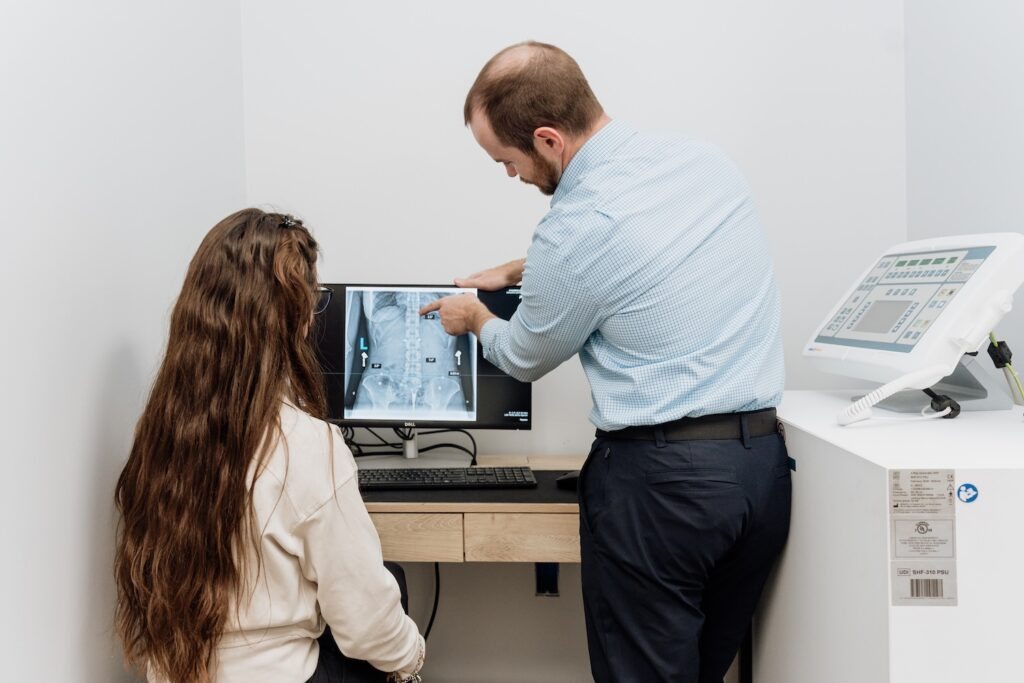
We start with a detailed history and hands-on exam to determine which joints are restricted, which muscles are overworked, and how your posture and movement patterns contribute to the pain. If needed, we discuss imaging based on clinical findings.
Precise spinal adjustments
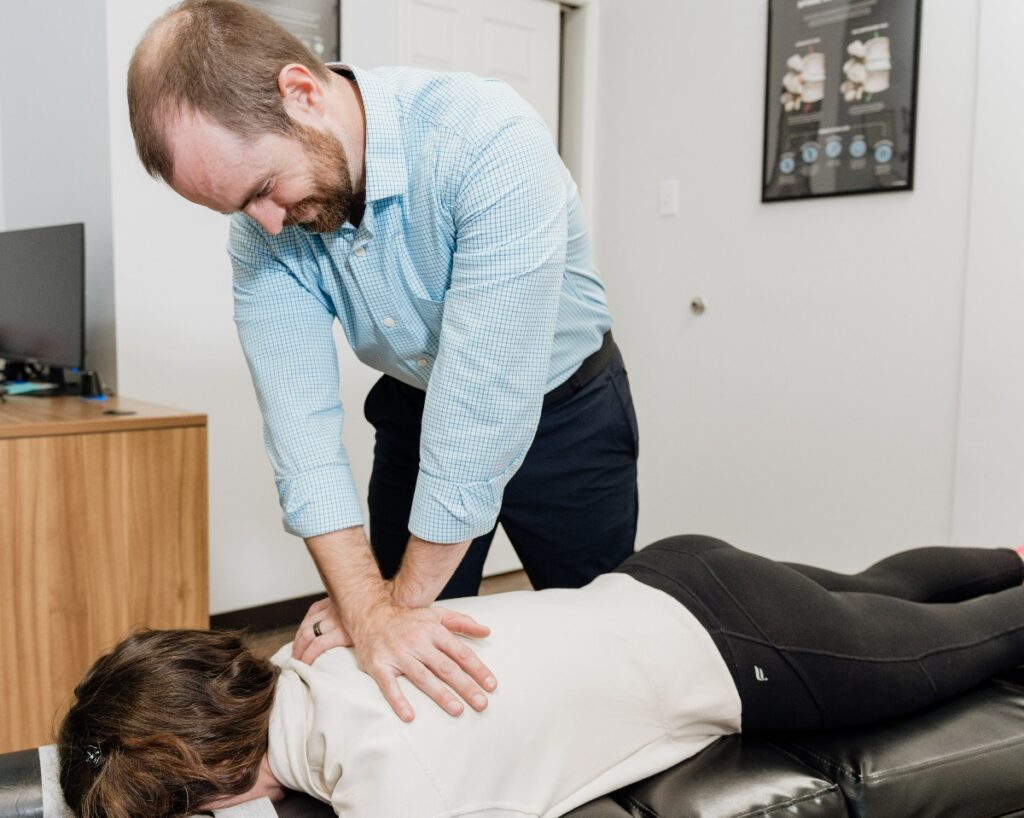
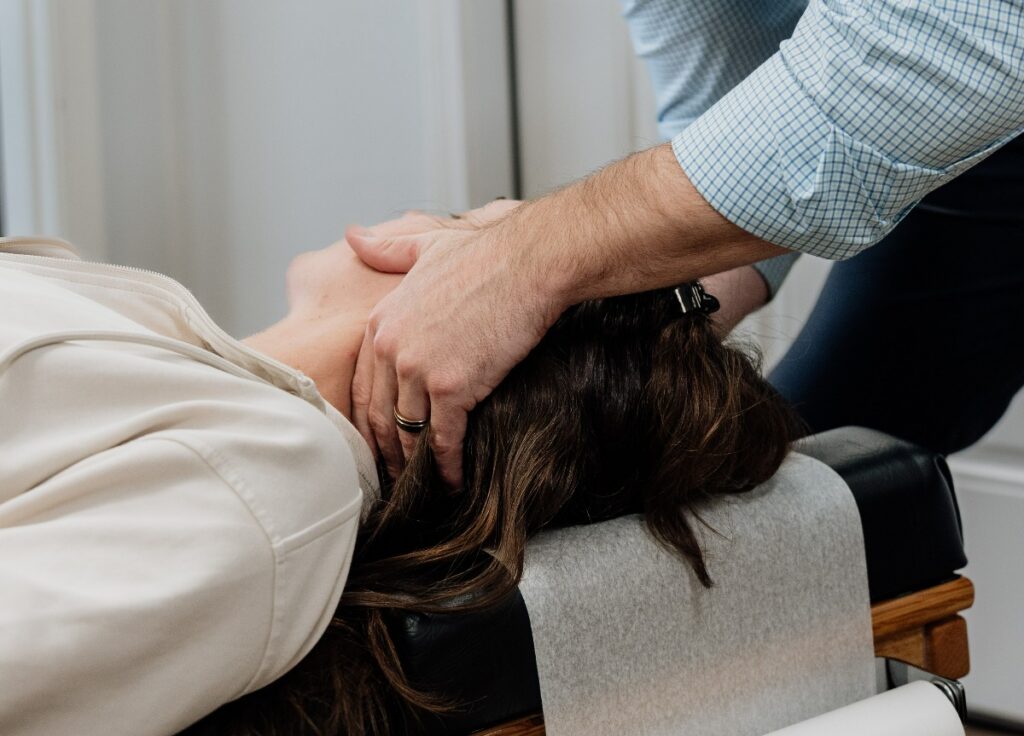
Gentle, targeted adjustments restore motion in the spine and pelvis. Many patients feel lighter, more flexible, and less guarded immediately afterward. By improving joint mechanics, we directly address common back pain causes—facet irritation, SI joint dysfunction, and compensatory muscle tension.
Soft-tissue and mobility work
When appropriate, we use muscle and fascia techniques to reduce guarding and improve flexibility, so adjustments hold better.
Stability and movement retraining
We coach simple, focused exercises to reinforce better mechanics in daily life—so lifting, sitting, walking, and sleeping are more comfortable.
Evidence supports this approach. Clinical guidelines from the American College of Physicians recommend spinal manipulation as a noninvasive option for acute and chronic low back pain (ACP Guideline). The National Institute for Health and Care Excellence also includes manual therapy among recommended conservative strategies for low back pain and sciatica (NICE NG59). The National Center for Complementary and Integrative Health notes that spinal manipulation can help some types of low back pain (NCCIH).
Our goal is always the same: reduce pain by correcting the underlying mechanical problem and give you the tools to keep your back resilient.
Practical Tips You Can Use Today
Small changes add up. Try these simple habits between visits to calm irritation and support healing.
- Change positions every 30–45 minutes. Stand, walk, or do 5–10 gentle back bends after long sitting.
- Hinge at your hips when lifting. Keep the load close, brace your core, and avoid twisting with weight.
- Make your workstation spine-friendly. Screen at eye level, feet flat, hips slightly higher than knees, low-back support if needed.
- Walk daily. Even 10–15 minutes promotes circulation, reduces stiffness, and boosts mood.
- Sleep smart. Side-lying with a pillow between knees or on your back with a pillow under knees helps neutralize the spine.
- Warm up before heavy chores. A few gentle squats, cat-camel motions, and hip openers prepare tissues for work.
When to See a Chiropractor in Magnolia
It’s wise to schedule a visit if your pain:
- Lasts more than a week or two, keeps returning, or limits daily activities
- Flares with specific movements like bending or sitting and isn’t improving with rest and light activity
- Comes with stiffness or a feeling that your back is “stuck” or needs to “pop”
Sometimes back pain signals something that needs immediate medical attention. Seek urgent care (not chiropractic first) if you notice:
- New loss of bowel or bladder control, significant leg weakness, or numbness in the “saddle” region
- Fever, unexplained weight loss, or history of significant trauma
- Progressively worsening, severe pain unrelieved by rest
If you’re unsure, call our Magnolia office. We’ll help you decide the right next step and refer appropriately when needed.
Common Mistakes That Keep Pain Around
- Waiting it out too long: Hoping pain will fade without addressing the cause can lead to compensations and recurring flare-ups. Early evaluation helps us correct the pattern before it sets in.
- Too much rest: A day or two of easing back is reasonable, but prolonged rest can stiffen joints and weaken stabilizers. Gentle movement is usually better than complete inactivity for mechanical back pain.
- Powering through with poor form: Lifting or twisting with irritated joints keeps the fire burning. Technique matters—our team will coach spine-sparing strategies tailored to your day.
- Ignoring the workstation: Hours at a poorly arranged desk add up. Small ergonomic tweaks make a big difference over time.
Myths vs. Facts
- Myth: “All back pain means something is seriously damaged.”
Fact: Most back pain is mechanical and improves when joint motion and muscle balance are restored. - Myth: “If my X-ray or MRI shows changes, I’ll always have pain.”
Fact: Many people without pain have age-related changes on imaging. Function and movement patterns often matter more than the picture. - Myth: “I should avoid activity until I’m pain-free.”
Fact: Gentle, guided movement typically helps mechanical back pain recover faster and more fully. - Myth: “Chiropractic is only for ‘cracking’ backs.”
Fact: Chiropractic care is a comprehensive, evidence-informed approach to restoring joint motion, improving muscle balance, and coaching healthy movement for lasting results.
Final Thoughts for Our Magnolia Community
Back pain has causes—and causes have solutions. At Southern Wellness Chiropractic, we take the time to find what’s driving your discomfort and focus care on the root of the problem. If you live in or around Magnolia and your back has been giving you trouble, we’re here to help you move with confidence again. You don’t have to guess your way through it.
FAQs
What are the most common back pain causes you see in Magnolia?
Muscle strain, restricted facet or SI joints, disc irritation, and posture-related stress are the top drivers we see. Yard work weekends, commuting, and desk setups are frequent triggers.
How do I know if my pain is from a disc or a muscle?
Disc irritation often worsens with sitting, bending forward, or coughing and can send pain down a leg. Muscle strain is usually more localized and sore with direct use. A chiropractic exam can differentiate and guide care.
Can chiropractic help sciatica?
Yes, when sciatica stems from mechanical irritation—such as disc or joint-related nerve pressure—chiropractic adjustments and targeted care may reduce irritation and improve function. Individual evaluation is essential.
Is chiropractic care safe?
For most people, chiropractic care is considered safe when delivered by a licensed chiropractor. We tailor techniques to your age, health history, and comfort, and refer when another type of care is more appropriate.
How long until I feel better?
Timelines vary. Many patients notice relief within a few visits, especially with consistent home habits. The goal is both short-term relief and long-term resilience.
What’s the best sleeping position for back pain?
Side-lying with a pillow between your knees or on your back with a pillow under your knees helps keep the spine neutral and reduces stress on sensitive tissues.
TL;DR
- Back pain causes are usually mechanical—irritated joints, tight muscles, or disc stress from daily movement and posture.
- Chiropractic care targets the root cause by restoring joint motion, easing muscle tension, and improving movement patterns.
- Simple habits—posture breaks, walking, safe lifting, and supportive sleep positions—help calm irritation.
- See a chiropractor if pain lasts more than 1–2 weeks, keeps returning, or limits daily life; seek urgent care for red flags like loss of bladder control or significant leg weakness.
- In Magnolia, Southern Wellness Chiropractic is here to help you move comfortably and confidently again.